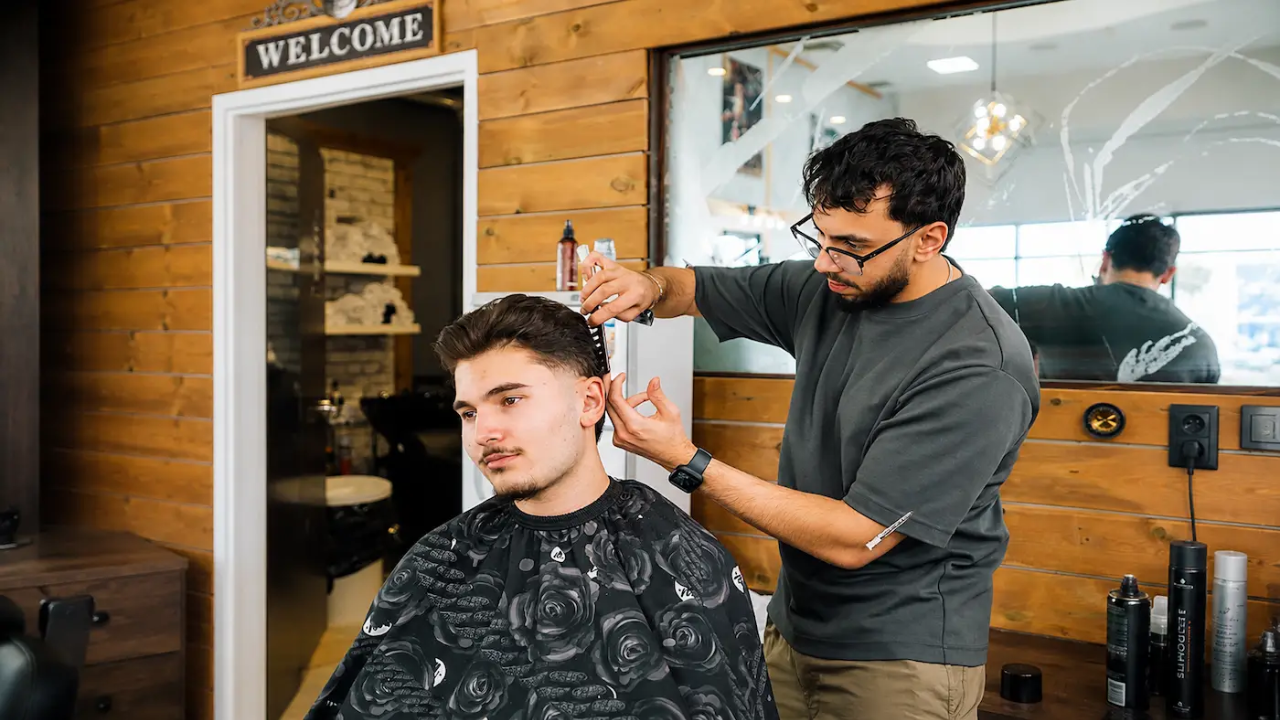
A mid fade will begin on the sides and back in the middle to reveal a fade gradient between the hair length of the top and the length around the sides and back. It is placed in the middle of the low fade and high fade so you can visually see the contrast without this fade setting being as high as a high fade. The image can be neat, yet offer much room for further styling.
Additionally, it is good to know what a mid fade is as compared to a mid taper fade before booking the cut. While it may sound the same, a mid fade takes hair off the sides and back, but a mid taper leaves the rest of the hair on the sides and works the fade around the sideburns and neckline.
Table of Contents
What Is a Mid Fade?
A mid fade is typically a fade area that begins approximately mid-side or mid-back. The exact height is not something that can be determined with signing on one anatomical mark; barbers can adjust it a little bit according to your head shape, hair density, height of the hairline and what you want the look to be. It provides better contrast to a low fade and results in a bigger fade in the top sides with a high fade.
Mid Fade Guard Sizes and Blending
- Generally, the lower portion, around the neckline, is the shortest, with only the shortest guard barely touching the skin.
- It blends upwards from the middle zone using 2-3 guard changes to produce a steady fade.
- This top portion (above the fade line) maintains the original length for versatility in styling.
What Is a Mid Taper Fade?
A mid taper can also be an ideal choice if you wish to have your haircut appear clean instead of the fade becoming the focal point. As a result, there is not a particularly strong transition curve to the top as there is on most other wetsuits, due to more of the natural side volume remaining. The style is especially efficient for those who prefer to go with a nice cut and are able to let it grow in a natural way.
Mid Fade vs Mid Taper Fade: What’s the Difference?
In both cuts, the peak is approximately at mid-height between the ear and the temple on the head. The strength of this fade, however, is what makes all the difference to the overall look.
| Feature | Mid Fade | Mid Taper Fade |
| Faded Area | Entire perimeter (sides and back) | Isolated sideburns and neckline only |
| Scalp Exposure | High exposure on lower half of head | Low exposure, limited to edges |
| Side Hair Bulk | Cut very short up to the midpoint | Maintained naturally above the ears |
| Maintenance | High (requires frequent touch-ups) | Low to Medium (grows out more naturally) |
What Face Shapes Suit a Mid Fade?
Face shape can help guide the choice, but it shouldn’t be the only deciding factor. The effect of the same mid fade will vary between individuals depending on hair density, shape, top length, etc. and personal preference. The orientation of the face usually permits lots of flexibility, and a mid fade can provide helpful opson for rounder faces. For those with a stronger jawline, the clean fade might look good as well.
Face Shape Recommendations
- Oval face: Will generally work over a wide height of fading and can be very versatile with regards to the length of fading on the top.
- Round Faces: Can use a mid fade to structure, particularly when there is some height and/or texture at the top.
- Round Faces: They do best when their locks are not faded or trimmed too short on the top.
- Long or narrow faces: A lower fade or more side volume may create better overall balance.
Mid Fade for Different Hair Types
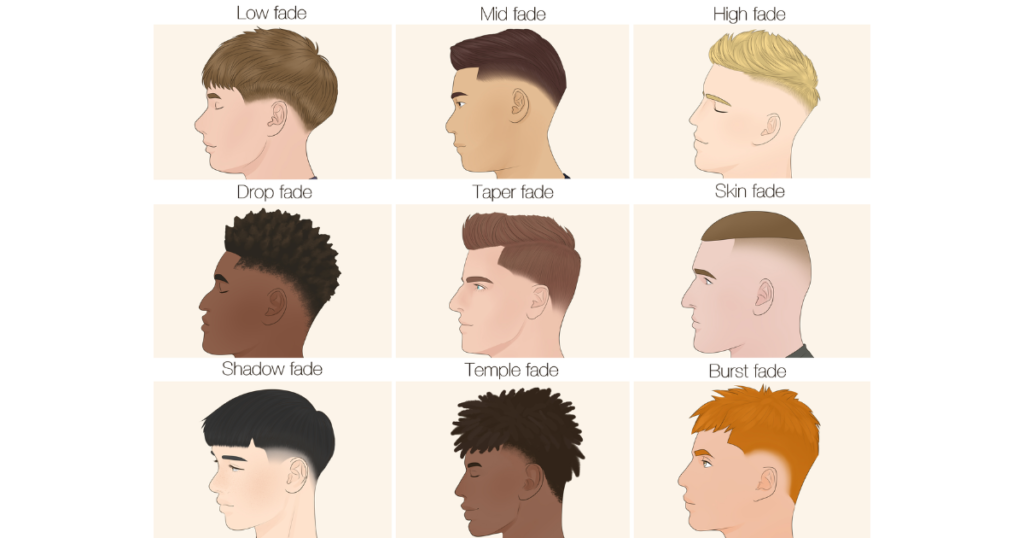
For people with straight or wavy hair, a full fade often doesn’t pose any trouble, as the hair type is flat, making the blend visible. Hair that’s curly or coily can take on other shapes when they get shorter; however, the length of hair affects how the sides look after it dries out.
That’s why many barbers opt to work on curly clients with a mid taper fade. Achieving volume with the curls above the ears will help to maintain their pattern better, because it can occur if there is an excess of hair lost from thick curls.
A Real Barbershop Scenario Worth Knowing
Imagine two friends have haircuts on the same day prior to a family get-together. One has thick, straight, medium-thickness hair and desires sharp, camera-ready contrast. His barber applies a heavy mid fade so that the blend is wrapped around the entire head, with maximum mid fade.
The other friend is a curly friend who has issues with thinning hair. His barber recommends letting the curls go any other way, except that the hair in the sideburn area and neckline is to be tapered or cut off. Starting from the same height, there’s a difference between the two cuts because of the different coverage area; the result will be vastly different when you do styling.
What Barbers Consider Before Choosing a Mid Fade
The fade height is one component to consider. A barber might also consider your hair density, natural growth pattern, head shape, hairline, and length of hair that you would like to leave on top prior to choosing a mid fade. All these details will impact the flow of the fade into the rest of the haircut.
The level of hair thickness, for instance, will determine how much weight needs to be pulled to achieve what looks like the best overall transition, and for fine hair, a softer blend would be required instead in order to prevent too thin a side. The shape of the “back” of the haircut may also be thrown off due to cowlicks or uneven growth.
Your preferred finish is also important. A skin-close fade will have the maximum contrast, while a fade that leaves a shade darker at the bottom end (known as a shadow fade or clipper fade) will have less contrast. In case you’re not certain of which one works, turn to your barber with a photo example and ask them what they would alter for your kind of hair.
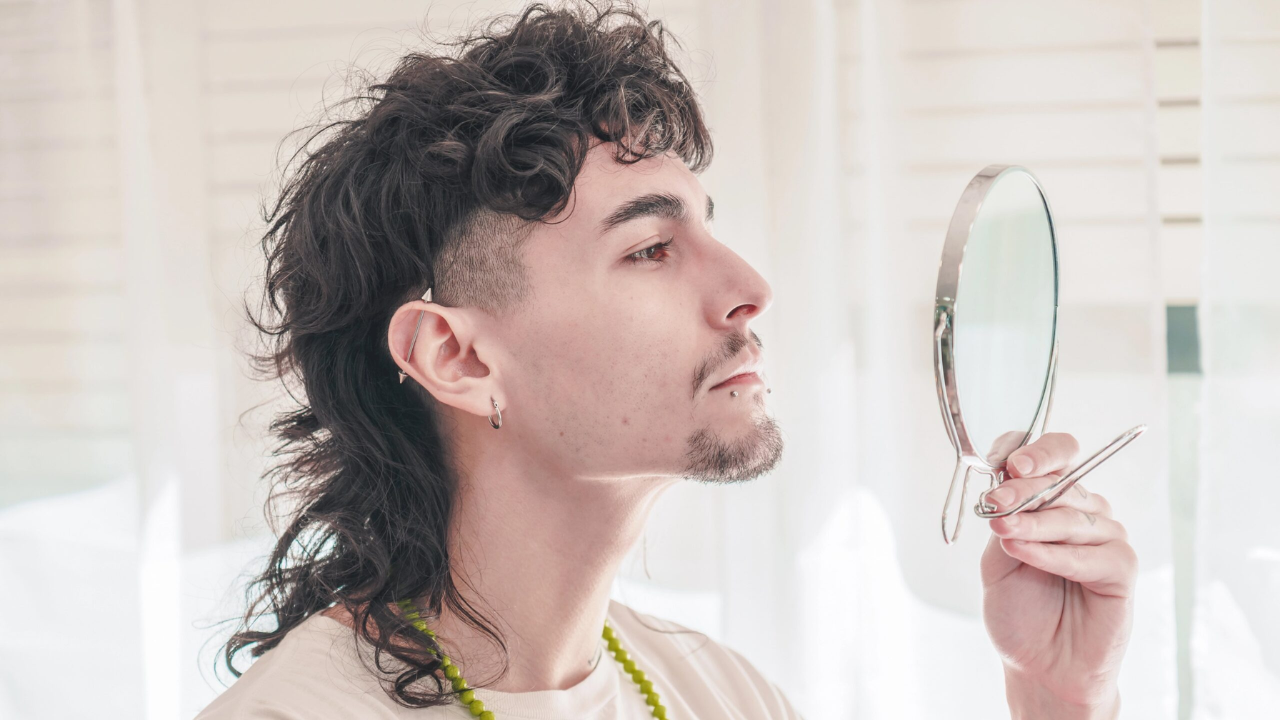
Looking for something bolder than a clean fade? See our guide to the modern mullet haircut for a style that mixes short sides with more length up top
How to Ask Your Barber for a Mid Fade
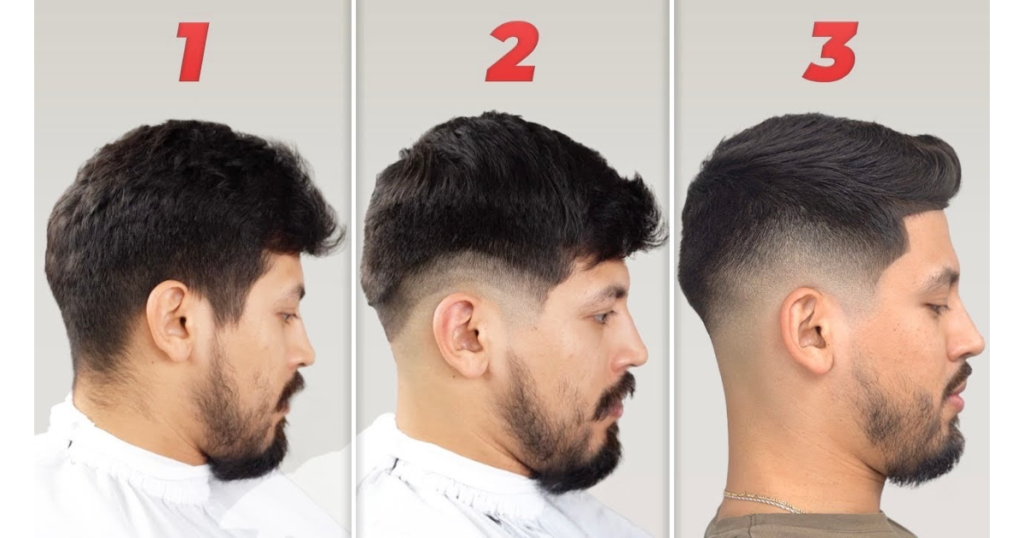
“Mid fade” is not as specific as it could be, but it is a useful request. For instance, you may choose to say, “I want a mid fade, maintain this length at the top, and don’t fade above this level.” Then present a picture to your barber which represents the quantity of contrast you desire.
If you don’t know about skin or softer, request a sample of both to see the difference. You may also send your barber the time between cuts you’ve been getting, as the ideal fade design can vary from one person to another, depending upon his time between cuts.
What to Tell Your Barber Before the Cut
- Where exactly the fade should start on the sides and back.
- Whether you want a full mid fade or an isolated mid taper fade.
- Which guard sizes the barber plans to use for blending.
- How often you should return for a touch-up appointment.
How Often Should You Get a Mid Fade or Taper?
Many people “restart” a mid fade after a couple of weeks if they wish to keep a hybrid very “crisp.” How fast you want it to be cleaned up depends on hair growth, contrast, and sharpness of the haircut.
Typically, the mid taper is faded more naturally, as it has less of a faded area. Some can wait four to six weeks before cleaning the neck and sideburn, and others may want to have it cleaned sooner. When deciding on the style, tell your barber that maintenance is very important if you choose the blowout style that has the longest time period between cuts.
How to Style a Mid Fade
Most of the contrast in a fade will be carried at the sides, so leaving the top textured will be more balanced. A light hold matte hair product is typically the best, as it will provide some texture without causing weight loss.
On the side for a mid taper fade, styling products are not as important; the volume remains natural there. Instead, pay attention to the top instead of the sides, which could be anything from a textured edge to a smooth edge or just a simple comb-over.
Mid Fade or Mid Taper: Which Should You Choose?
When boldness and contrast are essential and a structured cut is what you desire, a medium fade is the way to go. Does call for more frequent visits to the barbershop, but the results are a sharp look every time.
A mid taper fade is also a viable option if you prefer to maintain your natural volume, particularly if your hair is curlier. Both start at the same spot at the top of the head but have very different coverage and maintenance needs; your choice should depend on your lifestyle and hair type.
Conclusion
A mid fade and a mid taper fade share the same starting point but take very different paths from there. One clears the entire lower half of the head for maximum contrast. The other keeps things contained to the edges for a softer, lower-maintenance result. Knowing which one matches your hair type, face shape, and upkeep tolerance can mean the difference between walking out of the barbershop happy and asking for a fix two days later. When in doubt, bring a photo, use clear landmarks like the ear or brow line, and talk through your hair type honestly with your barber before the clippers come out.
FAQs
It’s a fade that blends hair starting at the midpoint between the temple and ear, wrapping around the entire head.
A mid taper fade only fades the sideburns and neckline, while a mid fade blends around the full perimeter.
Every two to three weeks keeps the blend line looking sharp and clean.
Yes, it typically lasts four to six weeks between touch-ups.
Yes, this cut works on any gender and pairs well with various top lengths.